
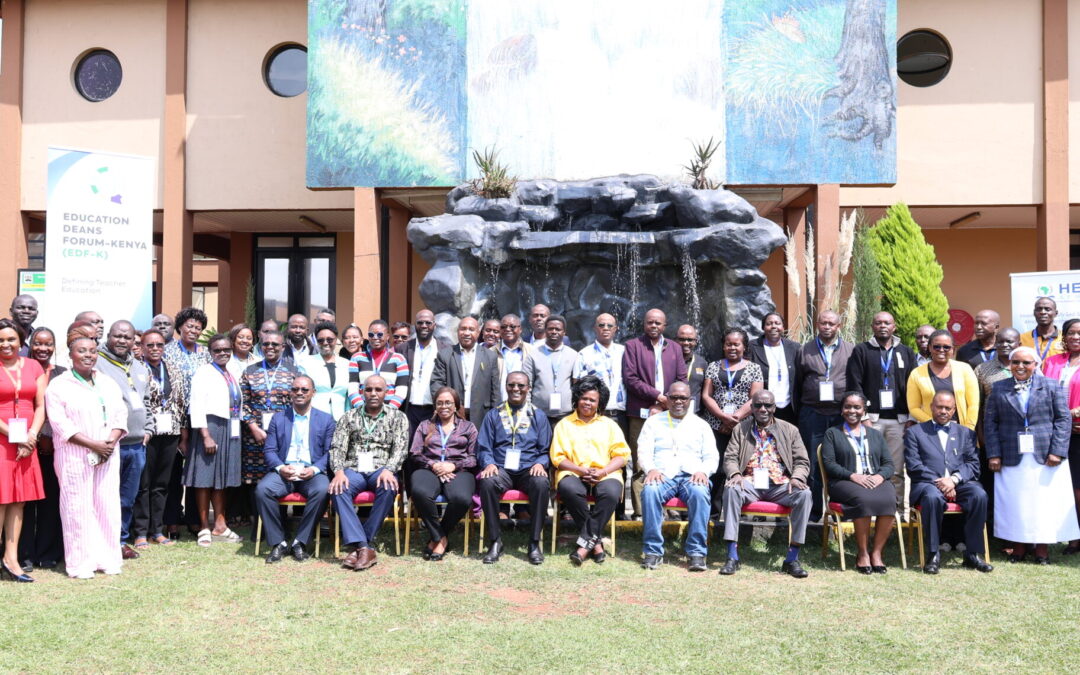
Transforming teacher education requires curriculum reform, strong academic leadership, and a shared commitment to harnessing research to drive meaningful educational change.
This is the consensus reached by deans of education from 47 public and private universities across Kenya, reaffirming their commitment to championing evidence-informed leadership, strengthening Competency-Based Education and Training (CBET), and positioning universities as drivers of educational change.
The commitment follows a capacity-building and faculty retooling programme organised by HERI Africa, which brought together academic leaders to explore how universities can better prepare teachers, strengthen research ecosystems, and generate evidence to inform policy and practice.
Universities at the Centre of Education Transformation
Faculties of education occupy a unique position in shaping the future of education. Beyond preparing teachers, they are responsible for generating the knowledge and conducting the research needed to address emerging educational challenges and support national development priorities.
Recognising this responsibility, the Deans agreed to strengthen collaboration across institutions and to provide leadership that promotes innovation, high quality teacher preparation, and evidence-informed decision-making.
The shared priorities include:
- Scaling Competency Based Education and Training (CBET) approaches within their universities.
- Strengthening teaching practice through improved mentorship, assessment, and curriculum transformation.
- Building stronger research cultures that generate locally relevant evidence.
- Increasing the use of education research to influence policy and improve classroom practice.
- Strengthening collaboration among faculties of education to accelerate education reform.
A Renewed Focus on Research for Impact
A major outcome of the engagement was the recognition that universities must play a more active role in producing research that responds to national and regional education priorities.
The deans committed to positioning their institutions as centres of excellence for educational research by:
- Leading flagship research initiatives aligned with national priorities.
- Strengthening university-based research ecosystems.
- Encouraging collaboration across institutions and disciplines.
- Promoting the translation of research into policies and practical solutions that improve learning outcomes.
The discussions also reinforced the importance of repositioning the Deans’ Forum as a trusted platform for policy dialogue, mentorship, institutional learning, and collaboration within Kenya’s higher education sector.
Strengthening Leadership for Sustainable Change
The engagement highlighted the critical role academic leaders play in driving institutional transformation. As universities continue implementing CBET and responding to evolving education needs, strong leadership will be essential in ensuring reforms translate into improved teaching, learning, and research.
The participating deans expressed confidence in their collective ability to champion these reforms within their institutions and to support fellow faculty members in adopting evidence-informed approaches to teacher education.
Dr Fedha Flora, who is the chair of deans of education in Kenya and the dean of the faculty of education at Egerton University, said it had been an educative journey. She said, “We have laid the groundwork for all our universities to be ready to redesign our curriculum to be CBE compliant. As we return to our universities, my message to all deans is that each of us is carrying a very important vehicle not only for curriculum development but also for strengthening educational research.”
Their shared commitment signals a growing recognition that the transformation of sustainable education depends on leaders who can bridge research, policy, and practice and foster innovation within universities.