
HERI Africa is making progress toward a more inclusive, locally driven education research system in Kenya that includes women and researchers with disabilities and special needs. Of HERI Africa’s 42 research scholars, 22 are women (52% of the cohort), and two have disabilities or special needs.
These milestones reflect the initiative’s commitment to expanding research opportunities and ensuring that diverse perspectives inform the evidence shaping education policy and practice.
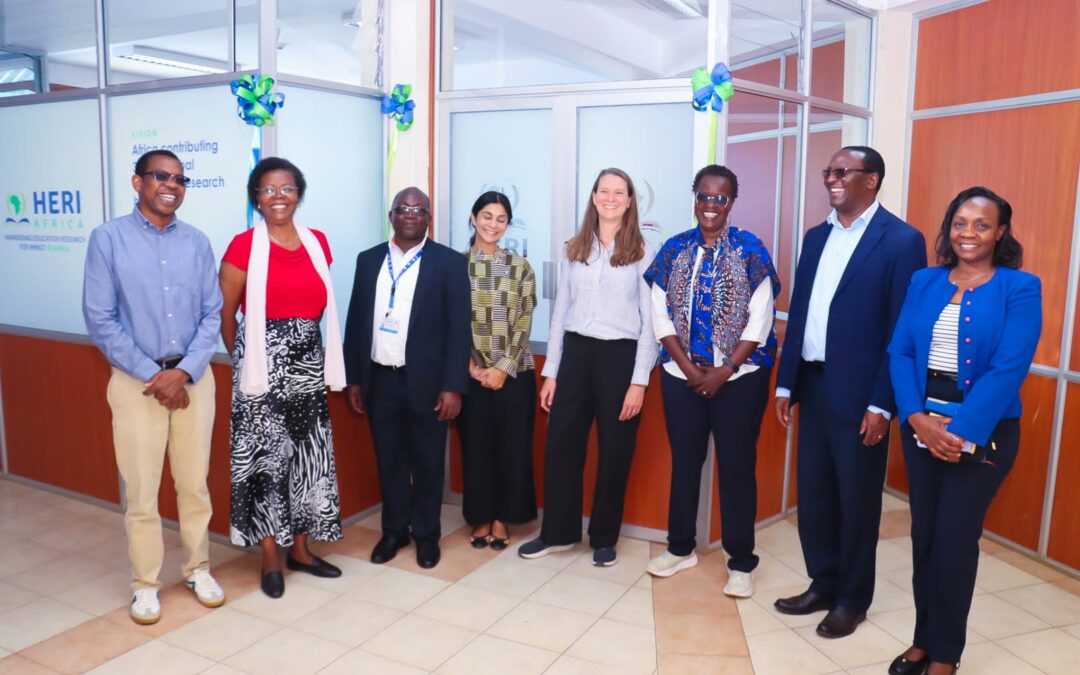
This progress was highlighted during an engagement hosted by the Commission for University Education (CUE) in Nairobi on 14th October 2026. CUE is spearheading HERI Africa, and the meeting brought together the HERI Africa Secretariat and representatives of its partner, Echidna Giving, to review the initiative’s implementation progress, emerging results, lessons learned, and priorities for advancing educational research in Kenya.
The engagement gave HERI Africa the opportunity to share progress since the initiative’s national launch in February 2026, including achievements in strengthening research capacity, institutionalising education research, and improving links between evidence and policy. Gender equality and inclusion were prominent in the discussions, reflecting Echidna Giving’s commitment to these priorities and their importance in building a research system that serves diverse learners and communities.
Advancing gender equality and inclusion in research
Scholars recruited so far are pursuing postgraduate studies across three Research Chairs hosted by the University of Embu, Kenyatta University, and Kisii University, each focusing on foundational numeracy, life skills and values education, and foundational literacy, respectively.
HERI Africa is further advancing its gender and inclusion agenda through an open call for the Research Chair in Gender, Equity and Social Inclusion in Education. The Chair is intended to strengthen research on inequalities in education and contribute evidence to inform more equitable policies and practices.
As the initiative develops, sustaining women’s participation, expanding opportunities for researchers with disabilities, and embedding inclusion across research design, implementation and communication will remain important to ensuring that the benefits of education research reach diverse communities.
Building a national agenda for education research
A central milestone in HERI Africa’s work has been the development and endorsement of Kenya’s National Education Research Agenda (NERA). Endorsed by the Cabinet Secretary, Hon Julius Migos, for Education in February 2026, the agenda brings together nine research themes, identified and validated through engagement with more than 350 stakeholders.
The themes cover key priorities, including equity, inclusion and gender mainstreaming; foundational learning and education reforms; teacher education; science, technology and innovation; assessment and data systems; education financing; and learning in crisis contexts.
NERA provides a shared framework to align education research with Kenya’s priorities and strengthen relationships among research institutions, government agencies, and those responsible for delivering education services.
The initiative’s longer-term ambition is to increase Africa’s contribution to global education research from less than 3% today to 30% by 2050, with African researchers taking a leading role in setting priorities and generating evidence relevant to the continent.
Looking ahead: From progress to lasting impact
Discussions with Echidna Giving also provided an opportunity to reflect on lessons emerging from implementation and priorities for the next 12 months. These include embedding NERA in government systems and university policies, expanding the Research Chairs, strengthening researcher training, improving the measurement of research uptake and building sustainable institutional support.